New Delhi — 25 August 2026. Last updated 25 August 2026.
The claim under a hundred clips is the same. Trump loved India, then he didn’t. First term, the stadiums. Second term, the invoice. Hate, they say. Personality flip. I don’t buy it, and the paper trail is why.
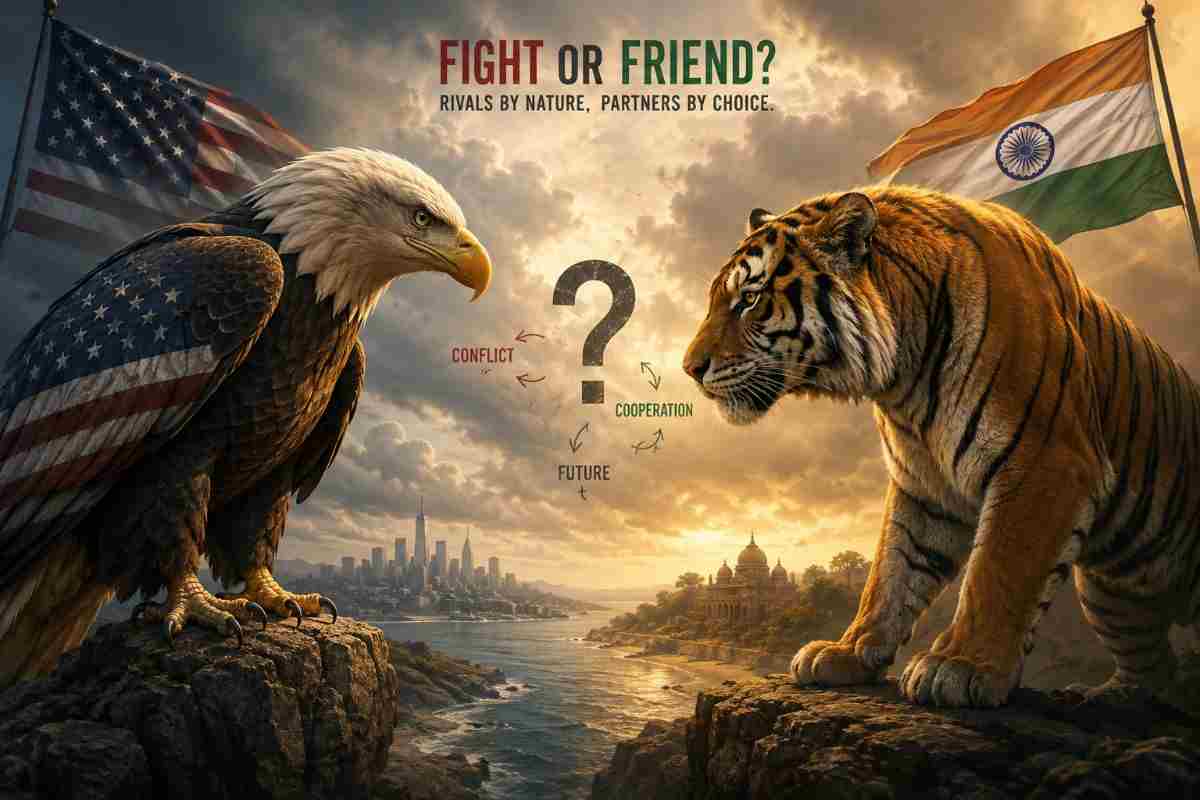
US policy toward India has run on two tracks for twenty years. One is a China-hedge partnership. The other is a market-access fight. America First did not invent the split. It put a tariff stamp on the second track and left the first one half-open. That is a colder story than hate. It is also the one the documents support.
The hug was real. So was the invoice.
Houston, 2019: Howdy Modi. Ahmedabad, 2020: Namaste Trump. COMCASA (a military communications-sharing pact), BECA (a geospatial-intelligence sharing agreement), the 2+2 ministerial, Quad language. Defense moved. Diaspora rallies filled the frame.
Ashley J. Tellis did write a February 2020 Foreign Affairs essay called “The Surprising Success of the U.S.-Indian Partnership.” The subtitle is about defense cooperation “against the odds,” not a claim that New Delhi had chosen Washington against Beijing. Three years later he published the piece people actually remember: “America’s Bad Bet on India” (May 2023). Subtitle: “New Delhi Won’t Side With Washington Against Beijing.” A partnership-builder telling Washington not to assume India would pick a side.
The same first term that staged the rallies pulled India off the Generalized System of Preferences. I went back and read the USTR notice of 4 March 2019 myself. Two operative paragraphs. President’s direction. India, USTR said, had not given “equitable and reasonable access” in several sectors. China is not in the letter.
Harley-Davidson duties had been a running complaint since 2018. H-1B was already a campaign theme. CAATSA (the US sanctions law aimed at Russia, Iran and North Korea) hung over India’s S-400 buy from Moscow. The hug and the invoice ran in the same presidency. Only one of them made the highlight reel.
He did not draw the map
George W. Bush’s civil nuclear opening, 2005–08, recast India as a partner instead of a nuclear pariah. Barack Obama signed LEMOA (a logistics-support agreement for military access to each other’s facilities) and named India a Major Defense Partner. None of that required Trump to enjoy stadium diplomacy. It required a US strategy that wanted a large Asian power able to complicate China. Tellis, at Carnegie, has spent two decades arguing this is interest, not sentiment.
Trump’s first term rode that interest. China was the organizing threat. India was useful. Chemistry with Narendra Modi made the rallies easy. America First still taxed the trade file.
Term two did not delete the first track. On 13 February 2025 the White House issued the United States–India Joint Leaders’ Statement launching US India COMPACT — Catalyzing Opportunities for Military Partnership, Accelerated Commerce & Technology — and a planned ten-year defense framework, more P-8I aircraft, Javelin and Stryker talk, even a review of fifth-generation fighter release. Both sides restated a $500 billion trade goal. Then Liberation Day arrived. Tariffs became the main tool for almost every partner. India was in the pile. That is the part the “he hates us now” posts skip.
What actually moved in 2025–26
Three files. Trade. Energy. Visas. Plus a political irritant: Trump’s claim that he stopped the May 2025 India–Pakistan fighting, which New Delhi rejected. The Congressional Research Service report R47597 lays the sequence out without adjectives.
April 2025: reciprocal tariffs under a national-emergency theory the Supreme Court later struck down. July–August 2025: an extra 25 percent stacked on for Russian oil. Combined headline rate: 50 percent — 25 percent reciprocal plus 25 percent oil-linked. On 6 August 2025, MEA’s official spokesperson called the actions “unfair, unjustified and unreasonable” and said India would protect its national interests. South Block, on letterhead.
September 2025: a presidential proclamation dated 19 September, with USCIS guidance that a $100,000 H-1B visa fee applies to new petitions filed for beneficiaries abroad from 21 September. Indian IT firms felt it first because they use the category most. The rule prices labor. It does not name a civilization.
The walk-back is tighter than a “6–9 February” blur. Trump announced a deal on Truth Social on 2 February 2026; Modi confirmed a framework the same day. Reuters reported the cut from 50 percent to 18 percent.
The formal joint statement and the executive order landed 6 February; the extra 25 percent oil duty came off effective 7 February. The White House fact sheet of 9 February says the extra 25 percent was removed “in recognition of India’s commitment to stop purchasing Russian Federation oil,” and the reciprocal rate moved from 25 to 18. What landed is a framework, not a signed bilateral trade agreement.
Tellis, on Frontline’s Latitude with Nirupama Subramanian in April 2025, said the administration had done “incredible damage to global confidence in the US.” He did not say Trump hates India. He said Washington had spent down trust. 2020, 2023, 2025: same analyst, shifting tools, same country still refusing to be a treaty deputy.
Why this matters
The United States wants Indian weight against China, Indian markets open, and Russian oil revenue squeezed. Those three wants collide. Trump governs the collision with tariffs. The collision is older than him.
What the documents do not say
There is no White House paper titled “we dislike Indians.” Reciprocal-tariff orders also hit Japan, the EU, and others. India was not unique on Liberation Day. It became a special case when the oil-linked 25 percent was stacked on top of the reciprocal 25 percent. Ukraine-war geopolitics plus a goods deficit. Not a grudge from Houston.
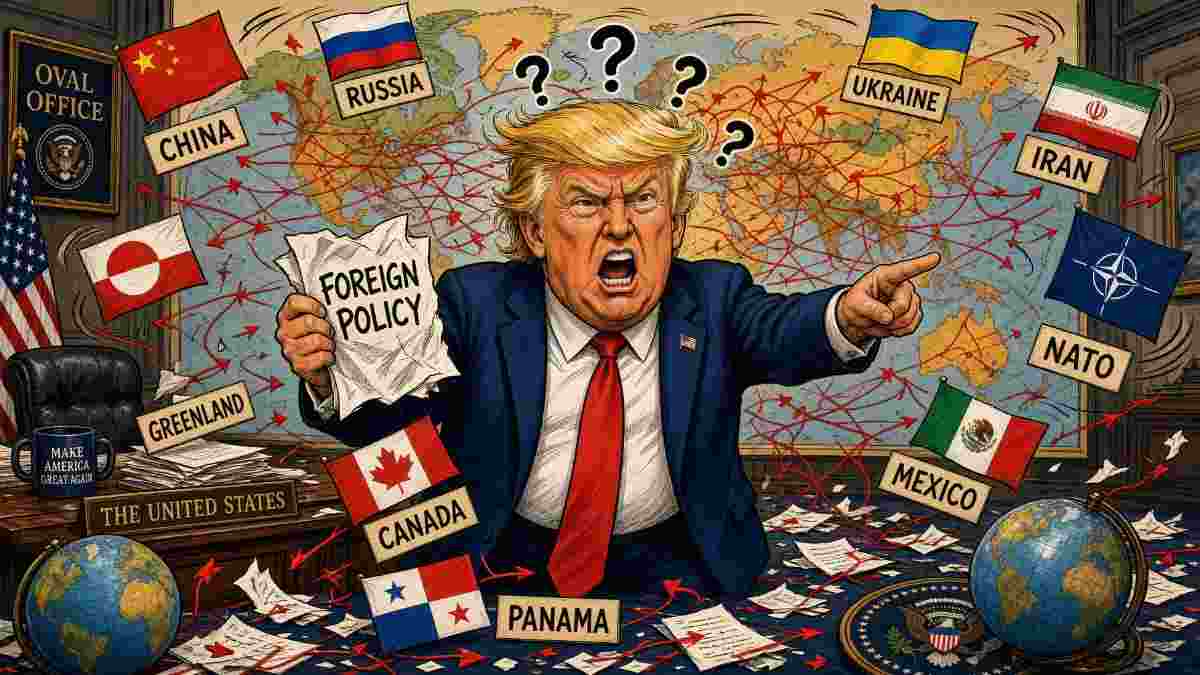
Was term one “pro India”? On defense, relative to the 1990s, yes. On GSP and H-1B talk, no. Was term two “anti India”? For months the 50 percent headline put India among the hardest hit. COMPACT and the February 2026 walk-back kept the partnership file open. Both terms are America First with a China subplot. The difference is which tool sat on the Resolute Desk: rallies and foundation deals in term one, tariffs as first resort in term two.
That is not a love story. It is not a hate story either. It is leverage. Read the four primary texts before you pick a reel: the USTR GSP notice, the MEA line, the COMPACT statement, the February 2026 fact sheet. They are linked above.
Key timeline
- 2005–08 — Bush civil nuclear opening. Strategic-partner track begins in earnest.
- 2016 — Obama-era Major Defense Partner designation; LEMOA in force.
- 2018–20 — First Trump term: 2+2, COMCASA, BECA, Howdy Modi, Namaste Trump. GSP terminated 2019.
- May 2023 — Tellis, “America’s Bad Bet on India.”
- 13 Feb 2025 — US India COMPACT joint leaders’ statement.
- Apr–Aug 2025 — Reciprocal 25% plus oil-linked 25% = 50%. MEA: unfair, unjustified, unreasonable.
- 19–21 Sep 2025 — H-1B visa fee proclamation and effective date for new overseas petitions.
- 2 Feb 2026 — Trump announces the framework (Truth Social); Modi confirms the same day.
- 6–7 Feb 2026 — Joint statement and EO; extra 25% oil tariff off, effective 7 Feb. Reciprocal rate to 18%. Combined 50% → 18%.
Fact-check verification
Held by the record
- First-term defense and diaspora optics were warm. First-term trade enforcement was not.
- The India-as-China-hedge line was built by earlier administrations. Trump used it.
- Tellis’s 2023 Foreign Affairs argument is that New Delhi will not automatically side with Washington against Beijing.
- Second-term tariffs (50% combined) and the H-1B visa fee inflicted real costs. MEA said so on 6 August 2025.
- February 2026 cut the oil penalty and lowered the reciprocal rate to 18%. The partnership file did not close.
Not held
- That Trump “hates India” as a people or a civilization. No official text says that.
- That term one was purely pro-India. GSP termination is on USTR letterhead, 4 March 2019.
- That term two is a clean break into enmity. COMPACT (Feb 2025) and the 2026 fact sheet still speak of defense and trade goals.
- That a 2020 Tellis essay declared India a committed China-containment ally. The 2020 title is about defense cooperation against the odds. The 2023 title is the warning against assuming a side.
Still open
- How much of the February 2026 framework becomes a signed bilateral trade agreement, and whether Russian oil actually goes to zero.
- Whether Pakistan-credit claims and H-1B practice keep eating the political goodwill the defense track needs.
Does Trump hate India? The documents don’t use that word. They say he will tax a partner that runs a surplus, buys Russian barrels, and sends H-1B workers — and still talk jets when China is the problem. Ugly for exporters. Insufficient, as evidence, for hate.
For more explainers that keep a claim next to a primary text, see our World section.