Fact Check India China policy shows a clear official line. India does not call China an enemy. New Delhi still treats the border as a core security issue.
Peace on the Line of Actual Control is the main condition for normal ties. External Affairs Minister S. Jaishankar stated this on 22 August 2026. He said peace and tranquillity in the border areas is a prerequisite for good relations.
He also said India must do business with China. However, it must do so with confidence. The Ministry of External Affairs has used the same language in recent briefings.
Officials call border issues “most serious.” Therefore, they say the state of the border will shape the wider relationship.
Fact Check India China Policy and Engagement
India keeps limited engagement for practical reasons. Both countries are large economies. In addition, they share supply chains.
Moreover, they work together in BRICS and the Shanghai Cooperation Organisation. Full separation is not realistic. However, engagement has clear limits.
After the 2020 border crisis, India linked real progress to stability on the ground. As a result, talks stay focused on border management. For example, the 25th round of Special Representatives talks in Beijing on 24-25 August 2026 centres on this point.
Fact Check India China policy confirms this border-first approach remains unchanged.
Why This Matters
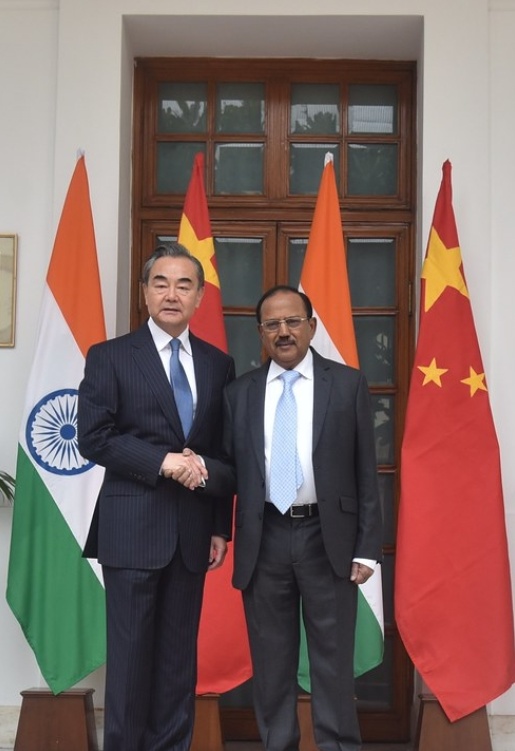
This approach matters for anyone following current affairs. It shows how India handles a powerful neighbour. In contrast, it allows competition and limited cooperation at the same time.
As a result, differences do not always turn into open conflict. Clear knowledge of the real government position helps separate facts from claims. Therefore, Fact Check India China policy makes this distinction plain.
India Taiwan Position
India does not recognise Taiwan as a sovereign country. This India Taiwan position has stayed the same for decades. Ties remain limited to economic, technology and cultural exchanges through representative offices.
In 2025, Chinese statements claimed Jaishankar said “Taiwan is part of China.” However, the Ministry of External Affairs clarified at once. Officials said there was “no change in our position on Taiwan.”
They noted that India keeps only non-political ties with Taipei. Meanwhile, China itself also works with Taiwan in economic and technical fields. In addition, India stopped repeating the phrase “One China policy” in joint documents after 2008-2010.
This followed Chinese steps on Arunachal Pradesh and Jammu and Kashmir. Nevertheless, the core policy of non-recognition has not changed.
Tibet 1954 Agreement
India formally accepted Tibet as part of China through the Tibet 1954 Agreement. The full name is the Agreement on Trade and Intercourse between the Tibet Region of China and India. It was signed in Peking on 29 April 1954.
The official text on the Ministry of External Affairs website uses the phrase “Tibet Region of China” many times. Moreover, the agreement’s preamble lists the five principles of peaceful coexistence, known as Panchsheel.
Trade agencies, markets and pilgrimage routes were set up on the clear basis that Tibet formed part of Chinese territory. Therefore, India also withdrew its remaining military and postal presence under related steps.
This recognition was confirmed again in the 2003 joint declaration during Prime Minister Atal Bihari Vajpayee’s visit. That document stated that the Tibet Autonomous Region is part of the People’s Republic of China.
India hosts the Dalai Lama and a large Tibetan refugee community on humanitarian grounds. However, official policy does not support political independence for Tibet. As a result, anti-China political activity from Indian soil is not allowed as government policy.
Key Timeline
- 29 April 1954: Tibet 1954 Agreement signed. Tibet is called the “Tibet Region of China.”
- 2003: Joint declaration confirms the Tibet Autonomous Region as part of China.
- After 2008: India largely stops using the “One China policy” phrase in bilateral texts.
- 2020 onwards: Border crisis makes LAC peace a clear precondition for normal ties.
- 2024-2026: Limited disengagement takes place. Jaishankar China statements and official MEA position continue to stress the border-first approach.
Fact-Check Summary
Confirmed by official records:
- India does not call China an enemy.
- LAC peace prerequisite remains the stated condition for normal relations.
- Taiwan is not recognised as a sovereign country.
- Tibet has been accepted as part of China since the 1954 Agreement.
Not supported by official records:
- Claims that India treats China as a formal ally.
- Claims that India supports political independence for Tibet today.
- Claims that India has recognised Taiwan as a country.
In short, Fact Check India China policy shows a careful and steady approach. New Delhi manages competition with China while keeping its core positions on the border, Taiwan and Tibet unchanged for decades.
For more on related diplomatic developments, see our World section.