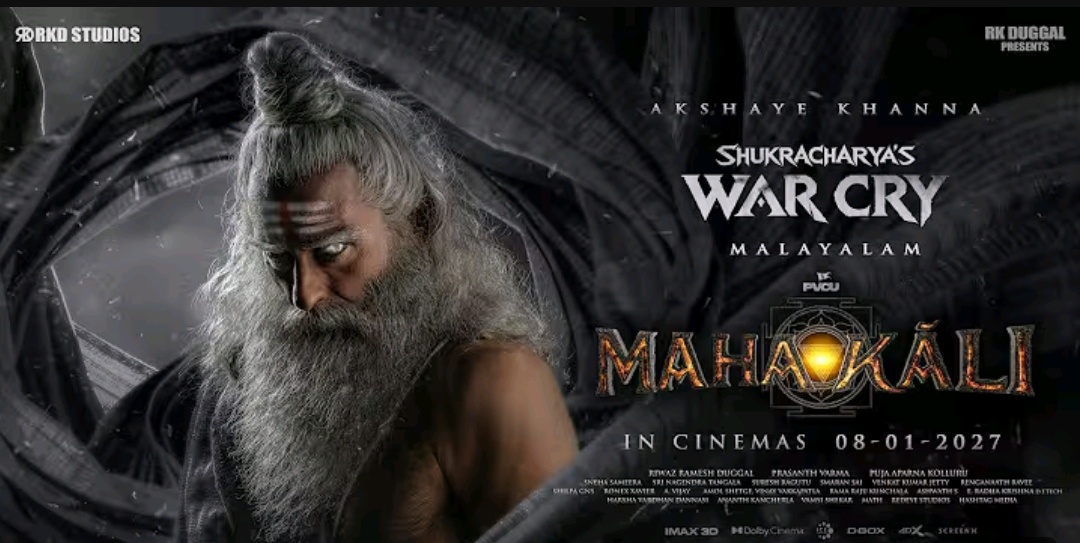
One teaser clip of Mahakali Shukracharya. One loaded word — villain. And a three-thousand-year-old answer nobody checked before hitting share.
Get this wrong and you’re not misreading a movie. You’re misreading the source. The Mahakali glimpse puts Shukracharya, guru of the Asuras, in a war cry. The Purāṇas put him in a different scene: a Bhārgava teacher trying to stop his king from giving the three worlds away.
The clip is advertising. The verses are not. Strip the poster away and you’re left with skandha, adhyāya, śloka — the numbering Gita Press and the standard vulgate still use. Press page numbers jump by edition. Śloka numbers don’t.
Every line quoted below sits in Devanagari first, English second. Read it yourself before you decide.
The teaser’s word, and the file it skipped
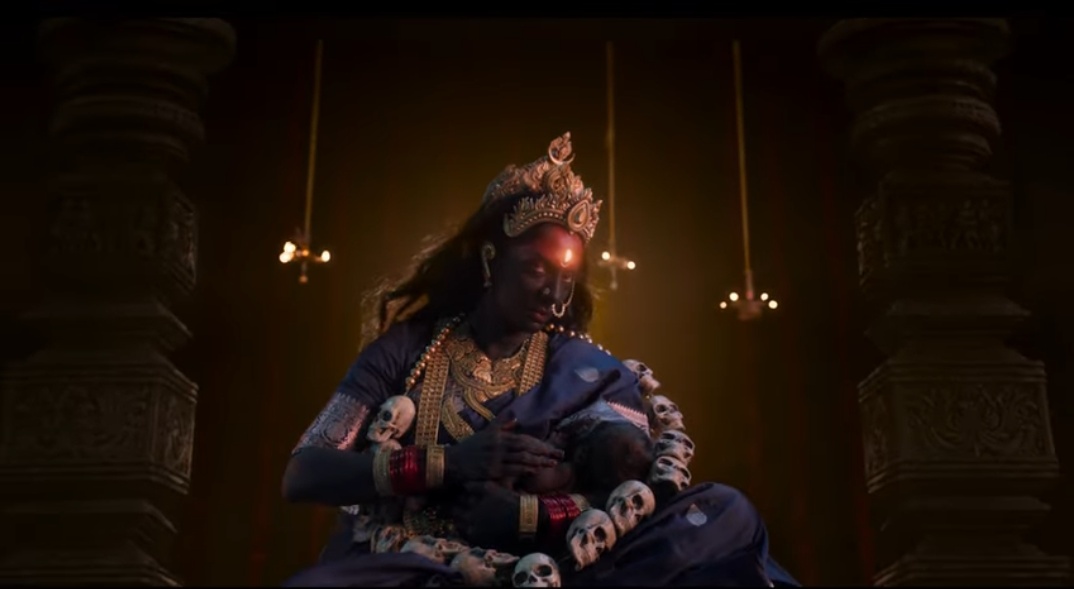
The public glimpse asks whether the gods were righteous when immortality went to the Devas and the Asuras were shut out. Fair question. The Purāṇas know that grievance. Samudra-manthana is not a Hollywood add-on.
Here’s the catch. The same clip welds that guru to Raktabīja and a war on humanity. That’s the part the trailer skipped past the books. Raktabīja has his own chapter. Śukra has his.
They are not the same page. Which brings us to what the oldest layer actually calls him.
What the Vedas and the Gītā call him
The four Vedas do not tell a “Shukracharya the villain” plot. In the Ṛgveda and Atharvaveda, Uśanas Kāvya is an ancient seer. Later tradition folds that Uśanas into Śukra — same name, same seer, centuries apart. And even the Gītā, which technically owes nothing to that older text since it’s Smṛti, not Śruti, still calls him the best of poets.
वृष्णीनां वासुदेवोऽस्मि पाण्डवानां धनञ्जयः ।
मुनीनामप्यहं व्यासः कवीनामुशना कविः ॥
English: among the Vṛṣṇis I am Vāsudeva; among the Pāṇḍavas, Dhanañjaya; among sages, Vyāsa; among poets, Uśanā the poet.
Krishna puts him next to Vyāsa. The Atharvaveda (kāṇḍa 4, sūkta 29, mantra 6) names Uśanā Kāvya in a hymn to Mitra-Varuṇa. That’s a seer’s name in a Veda, not a curse on a demon. So the question moves — from “did a teaser call him villain” to “does any early book?”
The bloodline the poster never prints
The Bhāgavata pins him in Bhṛgu’s line. Not in an asura womb.
मार्कण्डेयो मृकण्डस्य प्राणाद्वेदशिरा मुनिः ।
कविश्च भार्गवो यस्य भगवानुशना सुतः ॥
English: Mārkaṇḍeya was born of Mṛkaṇḍa; from Prāṇa came the sage Vedaśiras; and of the Bhārgava Kavi the son was the lordly Uśanā.
Uśanā is Śukra. A Brahmin ṛṣi’s son who later takes the other camp as his students. That choice is the drama. It is not a birth certificate of evil. The Devas still had a reason to fear him. Here’s why.
Saṃjīvanī: the line that decides the fear
After a Devāsura fight, Uśanā does not vanish. He works.
तत्राविनष्टावयवान् विद्यमानशिरोधरान् ।
उशना जीवयामास संजीवन्या स्वविद्यया ॥
English: There Uśanā brought back to life those whose limbs and necks were still intact, by his own knowledge called Saṃjīvanī.
This is the line that decides the whole argument about “danger.” A guru who can reverse a corpse-count will always look like an enemy from Indra’s side. The verse still names the act vidyā — knowledge — not pāpa. Other Purāṇa lists add that he won that vidyā by worship of Mahādeva. Tapas, not a toy. That’s the story everyone knows in outline. Here’s the one the war-cry skips.
Bali’s gift: the scene the teaser does not shoot
The sharpest Purāṇa file is a classroom, not a battlefield. Vāmana asks for three paces of land. Śukra sees the trap and cuts in.
श्रीशुक्र उवाच
एष वैरोचने साक्षाद् भगवान्विष्णुरव्ययः ।
कश्यपाददितेर्जातो देवानां कार्यसाधकः ॥
English: Śukra said: O son of Virocana, this one is none other than the imperishable Lord Viṣṇu, born of Kaśyapa and Aditi, here to do the work of the Devas.
प्रतिश्रुतं त्वयैतस्मै यदनर्थमजानता ।
न साधु मन्ये दैत्यानां महानुपगतोऽनयः ॥
English: You promised him this without seeing the harm. I do not think it good. Great trouble has come upon the Daityas.
एष ते स्थानमैश्वर्यं श्रियं तेजो यशः श्रुतम् ।
दास्यत्याच्छिद्य शक्राय मायामाणवको हरिः ॥
English: This Hari, wearing the māyā of a young student, will cut away your place, power, fortune, splendour, fame and learning, and hand them to Śakra (Indra).
That’s not what a stock villain sounds like. That’s a preceptor backing his king against a gift that will collapse the asura realm. Bali gives anyway. The Skanda Purāṇa even has Śukra curse the disciple for ignoring the warning.
Compare that to the teaser’s roar. One is counsel. One is packaging.
The second file, after the loss, undercuts the cartoon harder. Viṣṇu asks about faults in the rite. Śukra answers as a priest:
श्रीशुक्र उवाच
कुतस्तत्कर्मवैषम्यं यस्य कर्मेश्वरो भवान् ।
यज्ञेशो यज्ञपुरुषः सर्वभावेन पूजितः ॥
English: Śukra said: Where is the defect in the rite, when You, the Lord of karma, the Lord of yajña, the Yajña-puruṣa Himself, have been worshipped with the whole being?
A man who still names Viṣṇu as Yajñeśa after his side has lost is not the ghoul on the poster. Which is exactly where the second claim — the Raktabīja weld — falls apart.
Why this matters
Mass cinema needs a face for Adharma. A silver-haired guru with a war cry sells faster than a priest arguing about a water-jar. Once that frame hits share, it outruns Skandha 8. India’s archive is full of people who fight the Devas and still keep a dharma of their own. Collapsing all of them into one English word is how a glimpse becomes a textbook error.
Raktabīja lives in another adhyāya
But there’s a second file, and it tells a different story. The Devī Māhātmya — Mārkaṇḍeya Purāṇa adhyāyas 81–93 in the usual count — gives Raktabīja his own law. Chapter 8 of the seven-hundred, śloka 41:
रक्तबिन्दुर्यदा भूमौ पतत्यस्य शरीरतः ।
समुत्पतति मेदिन्यां तत्प्रमाणो महासुरः ॥
English: When a drop of blood from his body falls on the ground, a great asura of his own measure springs up on the earth.
Śloka 44 repeats it: as many drops, so many men of equal force. Kālī drinks the blood so the seed cannot land. Nowhere in that adhyāya does Śukrācārya issue the command. A film may join the guru and the blood-asura for one climax. That join is kāvya. It is not a missing Purāṇa page.
Citation map
- Atharvaveda 4.29.6; Bhagavad Gītā 10.37 — Uśanā as seer and poet.
- Bhāgavata 4.1.45 — Uśanā in the Bhṛgu line.
- Bhāgavata 8.11.47 — Saṃjīvanī restores asura troops.
- Bhāgavata 8.19.30–32 — Śukra names Vāmana as Viṣṇu and warns Bali.
- Bhāgavata 8.23.15 — after the loss, he still addresses Viṣṇu as Yajñeśa.
- Devī Māhātmya 8.40–44 — Raktabīja’s blood-boon, without Śukra as commander.
Fact-check verification
Held by the verses
- Śukra / Uśanā is a Bhārgava, a teacher, holder of Saṃjīvanī, preceptor of Bali’s side.
- He works against the Devas’ immediate interest in the Vāmana episode by trying to stop the gift.
- The same book lets him name Viṣṇu as Lord of sacrifice after the gift is done.
- Raktabīja’s clone-boon is Devī Māhātmya 8, not Bhāgavata 8.19.
Not held by those verses
- That the Vedas already tell a “Shukracharya villain” story matching a film teaser.
- That a Purāṇa śloka has him order the wiping out of the human race through Raktabīja.
- That “villain” in the English comic sense is a title the Bhāgavata gives him.
Still open
- How an unreleased film will stage these chapters. A glimpse is not a critical edition.
Was he a villain to the Devas? He was the other side’s ācārya. He used vidyā so his students would not stay dead. The Devas had a right to fear that. The books still refuse the shorter word. They call him Uśanā, Kāvya, Bhārgava, Śukra — guru, not ghoul.
For more explainers that keep a claim next to a śloka, see our India section.